CCTV Requirement
The CCTV coverage for a typical hospice will include
- Building perimeter, site entrances, car parking and any external buildings
- Building entrances and exits including emergency exits
- Internal corridors
- Reception and public areas e.g. shop and cafe
- Nurse stations
- Secure rooms e.g. server room and drug store.
Insurers and the police usually require 30 days of recorded images to be available and access to these needs to be in a secure space with controlled access.
Hospice CCTV use in the UK is governed by the UK General Data Protection Regulation (UK GDPR) and the Data Protection Act 2018, regulated by the Information Commissioner's Office (ICO).
Key regulations and best practices include:
- Lawful Basis: Hospices must have a clear, documented, and lawful basis for using CCTV, such as ensuring the safety and security of premises, patients, staff, volunteers, and visitors, and preventing/detecting crime or misconduct.
- Privacy Expectation: Cameras must not be placed in private areas where individuals have a heightened expectation of privacy, such as toilets, changing rooms, or patient bedrooms, except in exceptional, justified circumstances with executive approval (covert monitoring).
- Transparency and Signage: Clear and prominent signage must be displayed in all areas where CCTV is in operation to inform people they are being filmed. The signs should state the purpose and provide contact details for further privacy information.
Cameras are powered over CAT-6A data cables from a PoE Ethernet Network Switch. The maximum cable run is 90m so there may need to be several wiring hubs. External cameras may need optical fibre connections and local 230Vac power. Network Video Recorders provide the 30-day storage and access to recorded images using a desktop PC. The images are compressed using H.264 also known as MPEG-4 protocol. Cameras often have motion detection which controls what is recorded so that the image is recorded only when someone is walking down the corridor. This limits the data storage required and makes finding incidents much faster. All images are time-stamped.
Access Control
Hospices normally use electronic access control to provide 24-hour security to the building. Staff are issued with an RFID card that must be presented to a card reader to gain access to the building. Cards can be programmed to restrict access to rooms needing extra security such as a drug store or server room. These rooms can also require a pin number to be entered as well.
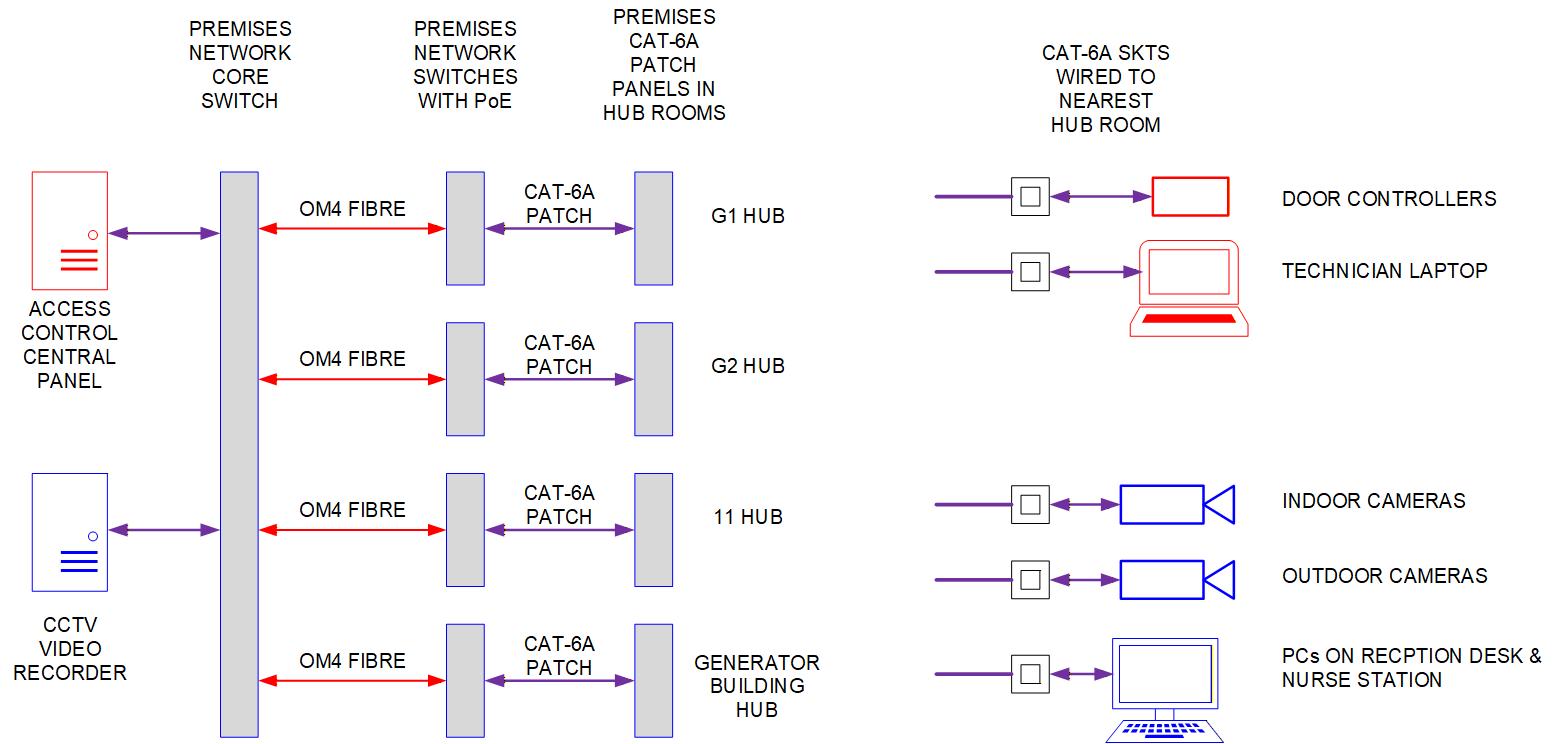
TYPICAL HOSPICE CCTV AND ACCESS CONTROL NETWORK